
Out-Spoken Classics
Explore some of our most popular and enduring titles from across our publishing backlist.
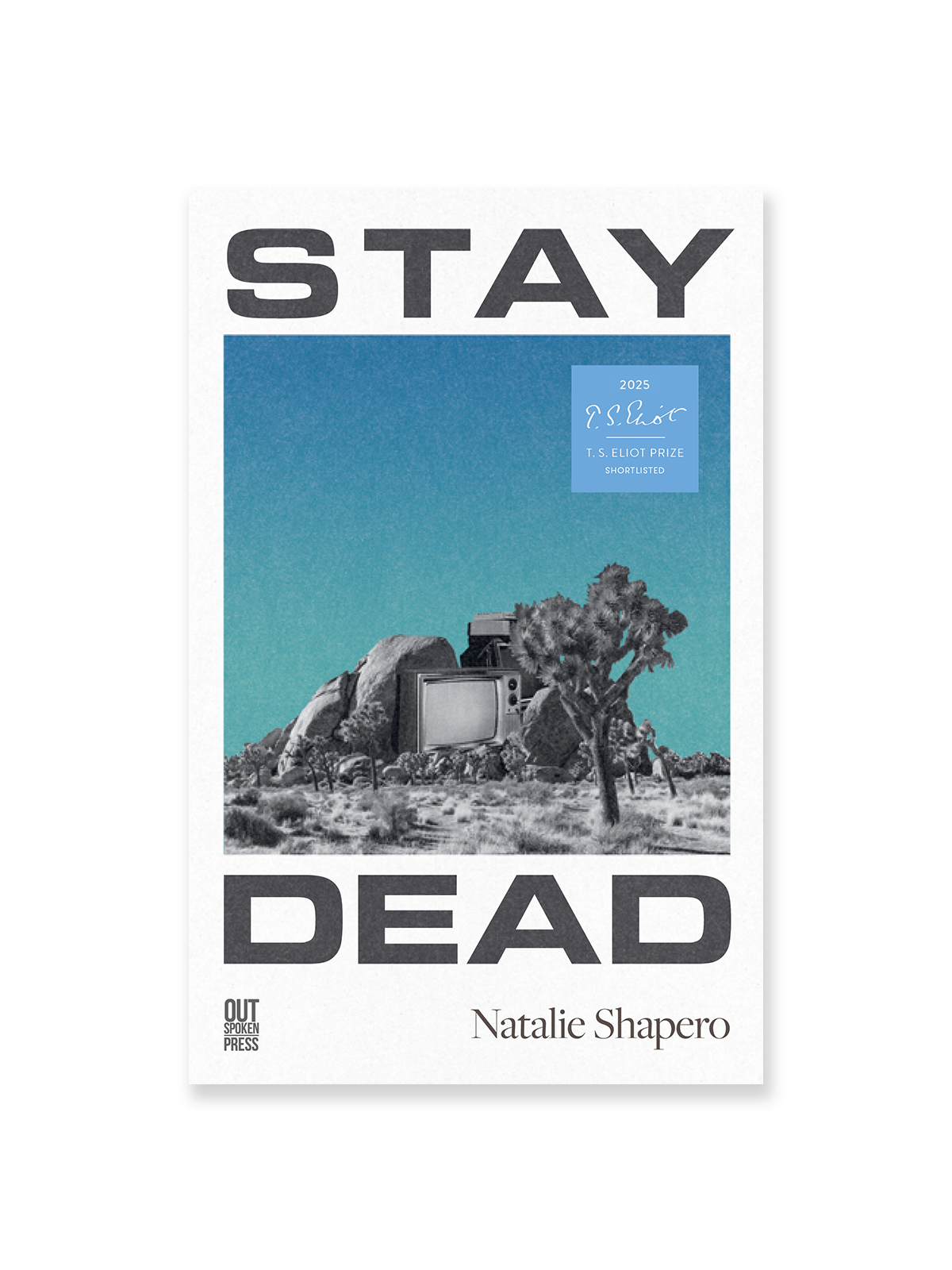
Shortlisted for the T.S. Eliot Prize 2025 - Longlisted for the National Book Award for Poetry 2025
In her fourth collection, Stay Dead, Natalie Shapero examines performance, power, comedy, and despair through the lenses of method acting and abstract expressionism.
‘In Stay Dead, Natalie Shapero leads us out from the wreckage into the brightly smouldering aftermath more precariously mortal, more humane and attentive and vivid than before. Her relentlessly dark, metaphysical poems of dying and not dying, surviving and not surviving, are as bleakly comical as they are halting. Shapero always keeps her lyrics effortlessly turning, veering her syntax, squinting and tacking – from abstract paintings, movie quotations and the private ownership of coastal redwoods, to the ocean hurling itself onto the rocks, the past, the afterlife, the dead that stay dead, and the dead that don’t. Shapero leaves a huge dent in oblivion to show us that it’s real. ’ — Jack Underwood
![[...] by Fady Joudah](https://images.squarespace-cdn.com/content/v1/6a380b411196116cad489921/2f8c28a4-f390-4fc8-984c-f5d9e49e0370/Shop+listing+image+-+fady+joudah.png)
Shortlisted for the 2024 Forward Prize for Best Collection, Winner of the 2025 Lenore Marshall Prize, Finalist for the National Book Award for Poetry, Winner of the Jackson Poetry Prize
From one of our most acclaimed contemporary writers, an urgent and essential collection of poems illuminating the visionary presence of Palestinians.
Fady Joudah’s powerful sixth collection of poems opens with, “I am unfinished business,” articulating the ongoing pathos of the Palestinian people. A rendering of Joudah’s survivance, […] speaks to Palestine’s daily and historic erasure and insists on presence inside and outside the ancestral land. Responding to the unspeakable in real time, Joudah offers multiple ways of seeing the world through a Palestinian lens.
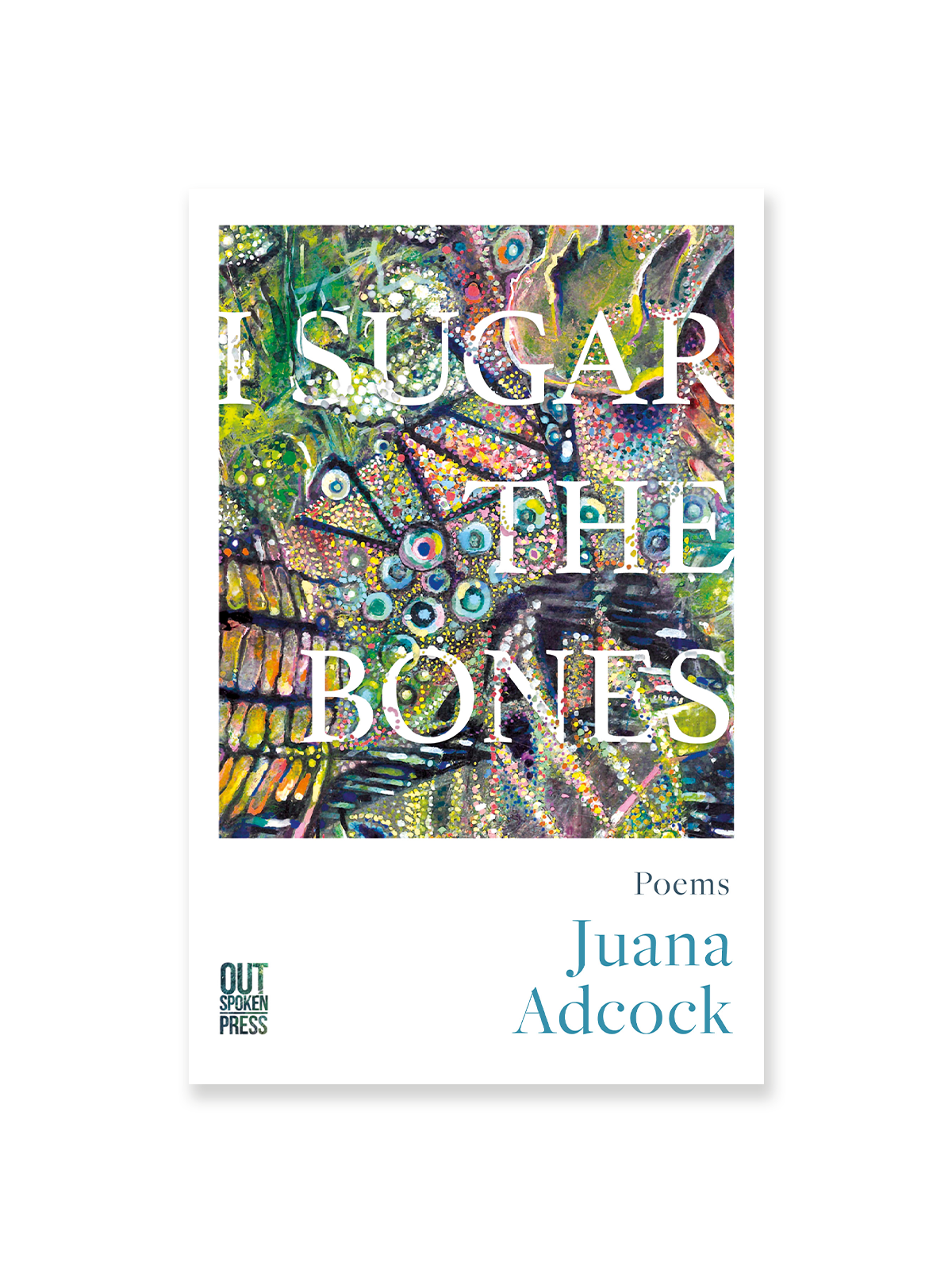
Shortlisted for the Forward Prize for Best Collection 2025 - Shortlisted for the Saltire Book Award for Poetry 2025
Through the porosity of the US/Mexico border, Freudian slippages, and toxic relationships, in her fourth collection, I Sugar the Bones, poet Juana Adcock interrogates what it means to cross from one country into another – the gradient spaces that inhabit the nexus between life and death, and the people and languages that sit either side of it.
Ghostly glitches, the role of rivers, and the character of Lisa Simpson as voiced for the Latin American market all empower I Sugar the Bones to stand as a polyvocal display; one where revelatory restlessness is underpinned by predicaments and realities which work to complicate the vistas of the interpersonal.

Shortlisted for the Forward Prizes 2023 Felix Dennis Prize for Best First Collection and the Rathbones Folio Prize 2023, a Poetry Book Society Winter Choice
‘a joyous liberatory dance against oppression’ — Roger Robinson
Cane, Corn & Gully is a genealogical and autobiographical collection which unites dance and poetry to observe, question and ruminate on what it means to adopt, perform, and pass down the notion of black West Indian femininity. Using labanotation and rhythm to analyse movement from Caribbean dances to movements carried out in everyday rituals, Safiya Kamaria Whitaker (previously Safiya Kamaria Kinshasa) uses these motifs as a form of cartography for the poems.
Cane, Corn & Gully interrogates survival, sexual exploitation, race, gender, and class and invests in a unique discourse on the violence inflicted on the black female body (historically and presently). It explores the meaning of movement in oppressive ideological structures and serves to vindicate the rebellious acts of black women past, present and yet to come.
‘tender, political, simultaneously exuberant and mournful, and lovingly populated with family of every definition’ — Safia Elhillo
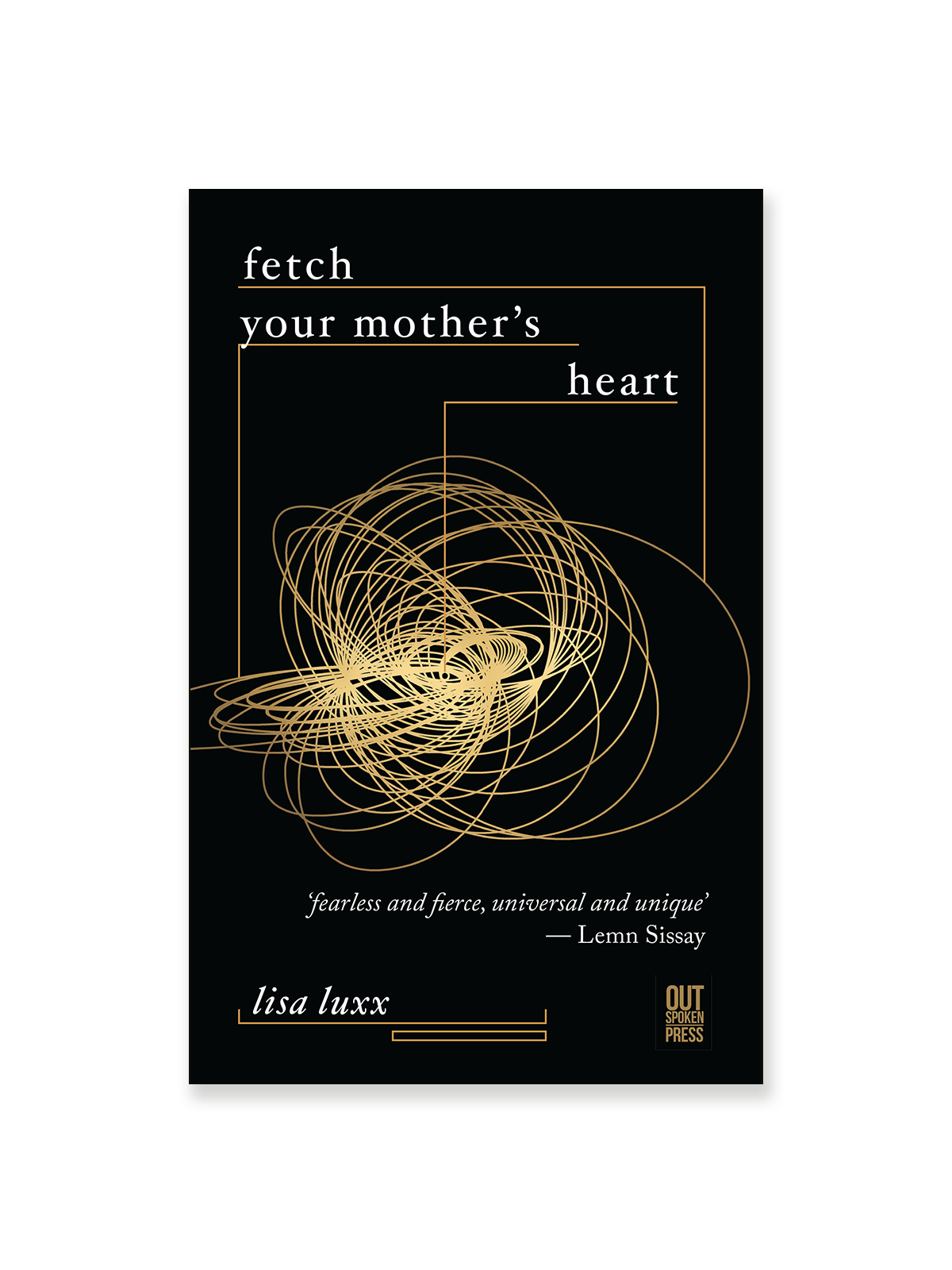
lisa luxx’s debut poetry collection is an examination of the tender violence that pools in all our states of wanting; from our intimacies to our uprisings. It searches the grief of our longing, from the eyes of displacement; carrying her experience in foster care, adoption, and as a mixed-heritage daughter of the Arab diaspora.
‘tender, political, simultaneously exuberant and mournful, and lovingly populated with family of every definition’ — Safia Elhillo
lisa luxx’s debut poetry collection is an examination of the tender violence that pools in all our states of wanting; from our intimacies to our uprisings. It searches the grief of our longing, from the eyes of displacement; carrying her experience in foster care, adoption, and as a mixed-heritage daughter of the Arab diaspora.
The poems in this collection follow a lesbian love affair as revolution erupts around and within. Drawing on old Arabic folk tales such as Majnun Layla, luxx re-imagines them through a queer lens. The poet tries to understand her gendered capacity to love, as she takes a feminist gaze to the role of sons and mothers, inspired by a brutal attack she witnessed where she found herself asking ‘what does it mean to recognise yourself in the beast?’
Fetch Your Mother’s Heart ultimately grasps for what is beyond our reach. Using powerful imagery, narrative, the dinner table and the gods — this is a potent response to our political epoch.
‘luxx writes beautifully and with heart about hope and unease, ancestry and the future’ — Zeina Hashem Beck
‘it is clear that luxx is a new force in literature...She is fearless and fierce, universal and unique.’ — Lemn Sissay
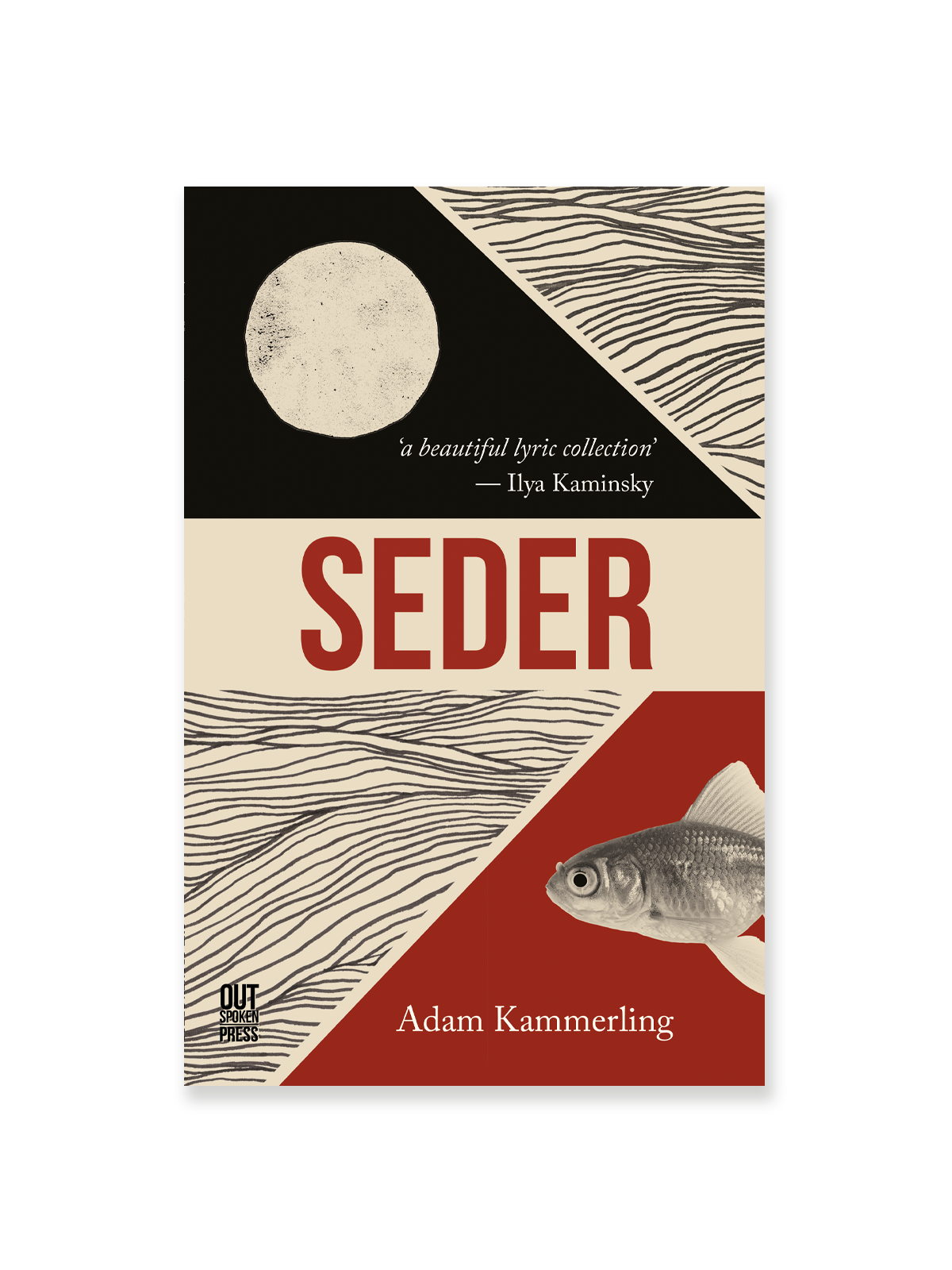
2020 National Jewish Book Award finalist
‘A beautiful lyric collection’ — Ilya Kaminsky
This innovative debut collection from Adam Kammerling is an archival and deft account of a person reckoning with their heritage and family history. Hybrid, dexterous and informed, Kammerling retraces his Jewish ancestry as poems fluctuate through time and space, leaving us with a forbidding sense that what has changed over recent decades is not enough.
‘To say that Seder is a beautiful, moving book would be true. But what does it mean? It means Seder is a book of very lyric poems where silences say as much as words do. It is a book of grief, that opens the grief up — no, blows it up — from the inside. Seder is a book of memory, the kind that refuses to leave us: a book wherein historical trauma is all too real, echoing our own present moment — echoing with a warning. And, yet, there is also tenderness, there is “love showing me the ground where I could lie down.” Indeed, a beautiful lyric collection.’ — Ilya Kaminsky
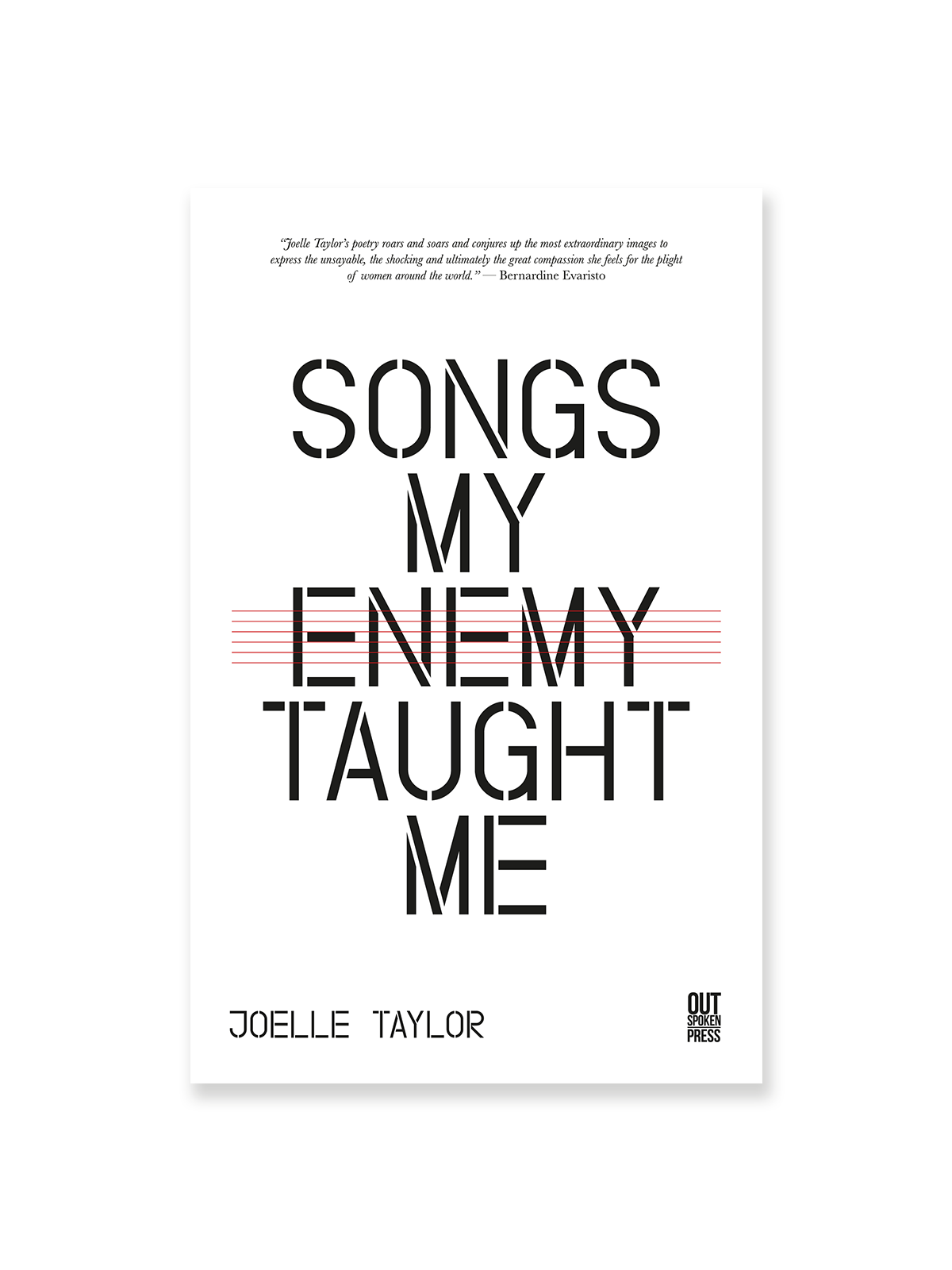
''Songs My Enemy Taught Me' is a collection of poems themed around the experiences of women globally, but it had simple beginnings. It began with me. It began with a small child in a hotel room not wanting to speak. It began with opera, but the kind that cannot be heard. It began at the point at which I ended.
This is a book about colonisation and terrorism, about invasion and ownership. It is a survival manual, a map, a photograph, a song. It is internet at 2am. It is the way your mother just looked at you. It is the way the girl in front of you on the soft journey home just reached for her keys. It is your hand reaching for keys.'

Contains Mild Peril is a book permeated by anxiety, not fatal threat, but the ambient manic hum of daily life. Precarity does something to us at the level of language; it shapes the ways we see and say. Our current climate – political, environmental, economic – engenders its own nervy music. These poems channel this collective apprehension in ways both deeply personal and instantly familiar. It is a collection that abounds in loss, in a sense of being lost, and in the gnawing fear of losing, yet its speakers address us with urgency. This is language in the throes of fighting back.
Dogtooth is a book about ghosts. Not in the undead sense, but more as in the spectres and echoes of absent friends. It looks at the discomforts, paranoias and phobias that haunt a very particular cultural moment.
It’s a book about fear, about a background static of suspicion. It’s about the twin anxieties of identity and assimilation, the folklore we carry and are carried by. The stories we tell ourselves about ourselves, and the damage those stories do.
Heterogeneous collects Anthony Anaxagorou’s poetry from 2009–2016. An extensive and revised selection taken from several previous volumes, Heterogeneous offers the reader an insight into the early poetry career of a poet whose subsequent collections were shortlisted for the TS Eliot Prize (After the Formalities, Penned in the Margins, 2019) and won the RSL Ondaatje Prize (Heritage Aesthetics, Granta, 2022).
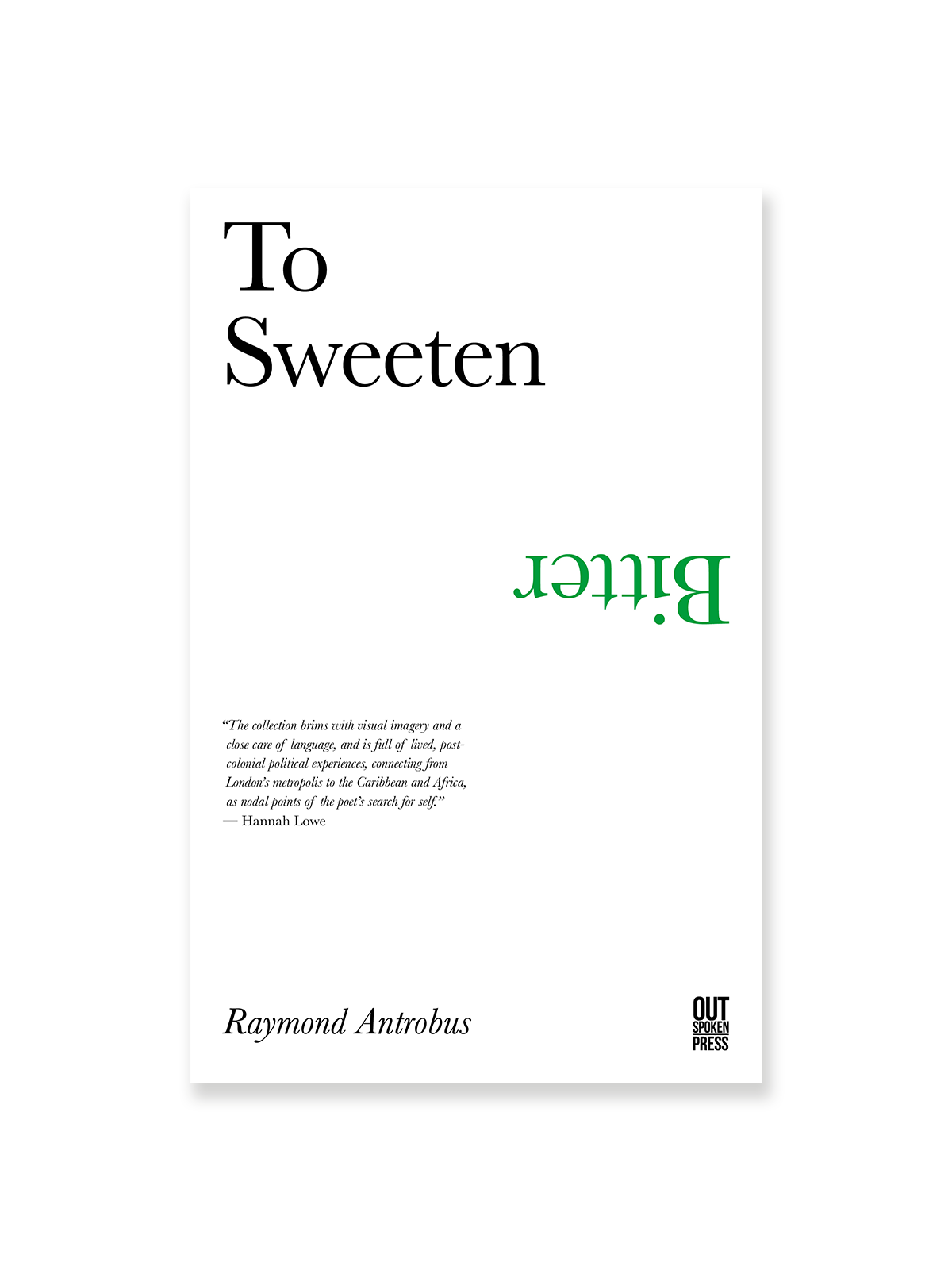
Consider the name of Raymond Antrobus’ extraordinary collection of poems for a moment: To Sweeten Bitter. It’s a phrase of infinite possibility and tender worry, open and searching, wanting and volatile. And in this sense, it serves as a kind of secret refrain for us, a haunted current that charges after each line and image, each heart-fraught question (“you think you’re going / to go free?”) and tentative hope (“there is always enough time / in our lives to see / what we must see”). Here, a father laughs “you cannot love sugar and hate your sweetness” and a son reckons with all that might mean “in the scratched light” of history and the “turning / and the losing of myself.” Derek Walcott once reflected that “I have never separated the writing of poetry from prayer;” these poems— in all their urgent beauty—affirm that faith, embody it. - R.A. Villanueva
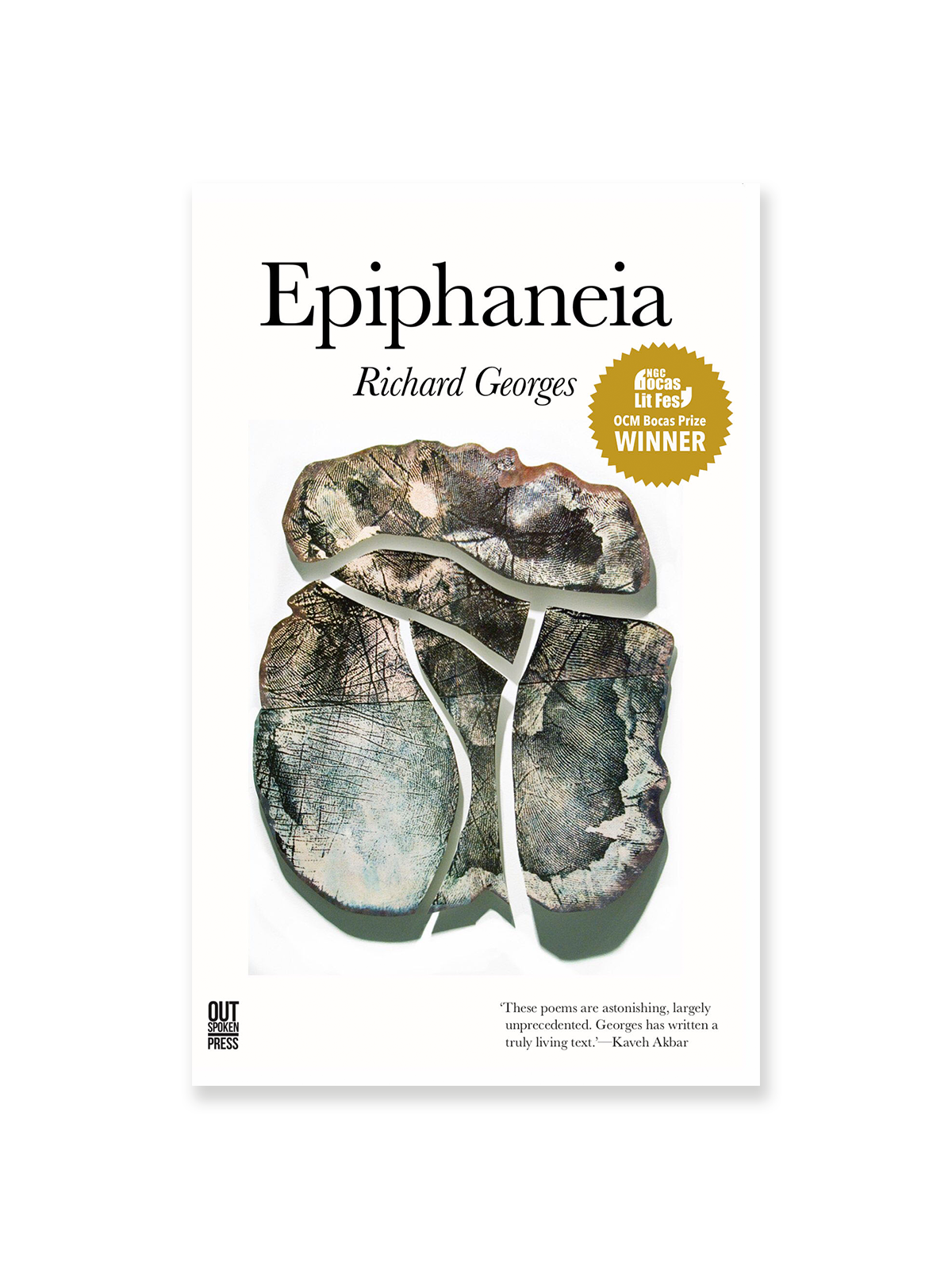
WINNER of the OCM Bocas Prize for Caribbean Literature 2020
‘They say birds always find their way back home but home is a nowhere — a memory; a never was.’
Set in the immediate aftermath of 2017’s Hurricane Irma, the most catastrophic storm to strike the British Virgin Islands, Richard Georges’ Epiphaneia stands as a collection of rich, transcendental verse. Beyond the loss and devastation that such a natural disaster brings, Georges’ ideas span beyond the physical world, asking us to consider the ways in which families and communities come together amidst such tragedy.
Blood runs under the earth. A father will instruct his daughter to the hills where their ancestors are buried. A flying man opens a door in the sky. Children play in the twisted roots of a landscape both dangerous and triumphant. Constantly attuned to the devastating power of nature and where the body, too, is ‘a precarious house’, these poems are hymns to the resilience of the human spirit. Georges locates in the negative space of aftermath both the ghosts of history, and the mythic beginnings of a yet unlived, rejuvenated world.
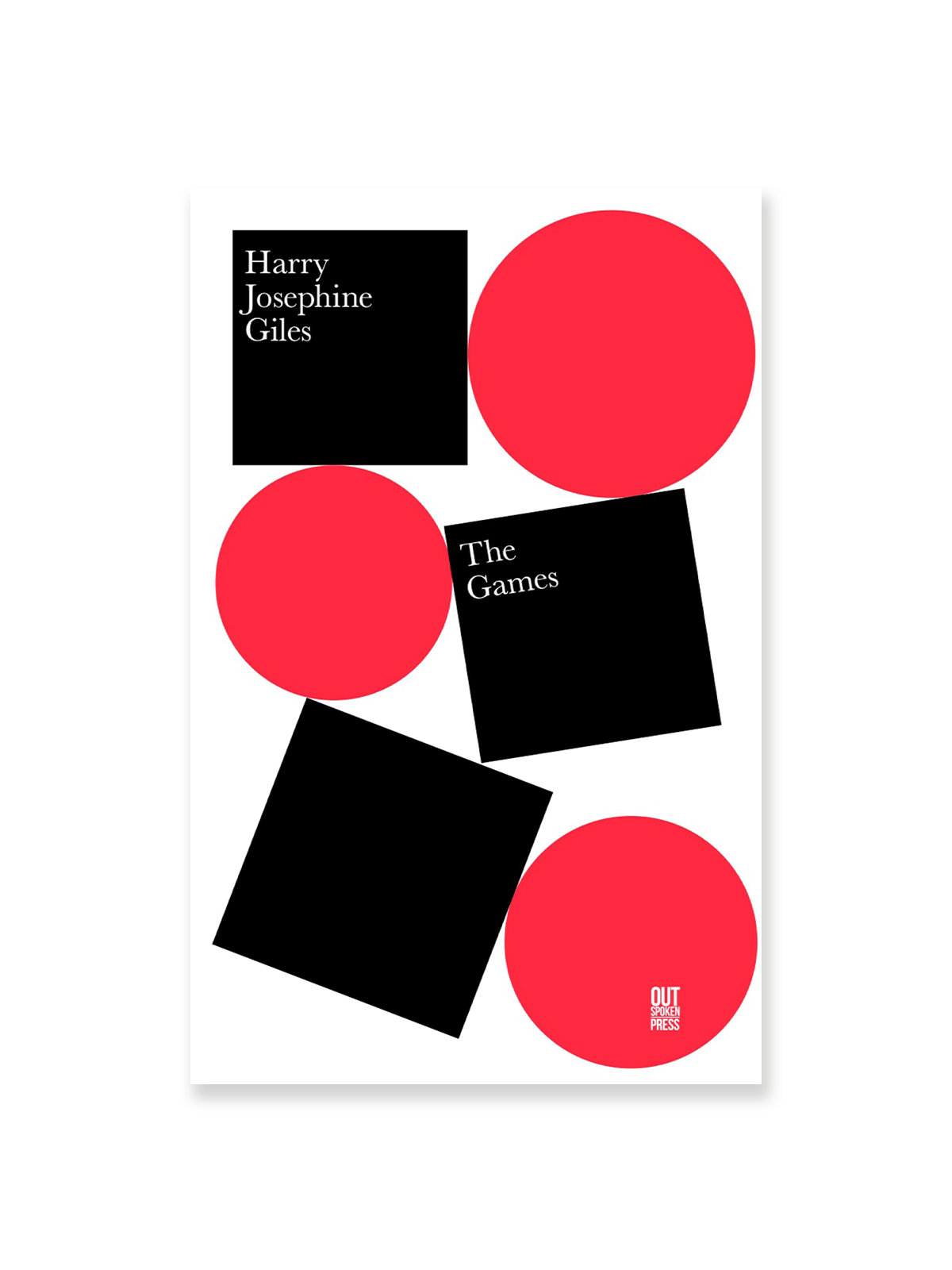
Shortlisted for the Saltire Poetry Book of the Year Award 2019
‘The Games’ is a book of play with language. In Scots and English, it mucks about with sound poetry, found poetry, computer-generated poetry, dirty poetry and others ways to blur and bust the borders of genre. Its themes are ecology, power and sex: how can you have fun in a system that’s trying to take power away from you? The Games makes and breaks rules in an effort to live a full life in a full world.
“This poetry disarms, barbs, takes risks. It is true poetry: vital, funny, humane, wrathful, pulsing and peculiar, in the very best of ways.”
— Jenni Fagan
Shortlisted for the British Book Awards 2026 Book of the Year - Discover Award
Haia Mohammed’s poems feel to me like the most important work being written in the world today. They are staggeringly impactful in their honesty, strength and beauty. The people of Gaza, as Haia says, are different; they write poems that defy death. These pieces are miracles of language and spirit, they are humanity at its best and most resilient. — Max Porter
The Age of Olive Trees is the debut pamphlet by Haia Mohammed, a 23-year-old poet and student from Khan Younis in Gaza, written while living through the ongoing genocide.
All proceeds from the sale of this book will go to the author, to help support her and her family.